
OSCILLATORS & VIBRATORY SCREENERS
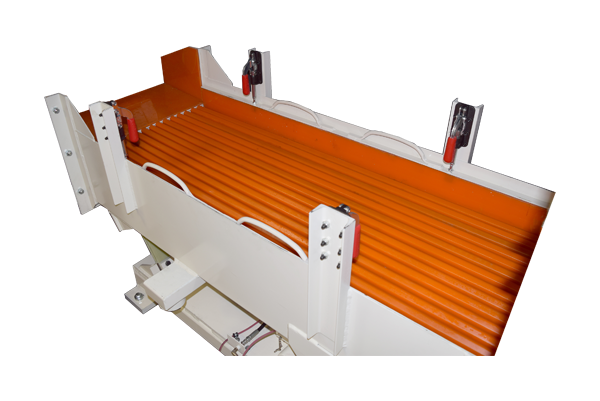
ALMCO vibratory screeners separate finished parts from finishing media quickly, efficiently, and without manual labor. Positioned at the discharge end of a vibratory tub, bowl, or centrifugal finisher, these units use controlled oscillating motion to move parts forward along a screen deck while media drops through to a return hopper or collection bin. ALMCO vibratory screening equipment delivers positive forward motion, excellent separation efficiency, and application-specific screen configurations, making them the standard solution for parts-media separation across automotive, aerospace, medical, firearms, and general manufacturing finishing operations.
As a U.S.-based vibratory screener manufacturer with nearly 80 years of finishing industry experience, ALMCO designs screeners sized to match your specific production volume, part geometry, and media type. Every vibratory screen is custom-selected for the application, and for difficult separation challenges, we engineer custom screen configurations that off-the-shelf screeners can’t handle. ALMCO screeners are also a direct replacement option for underperforming competitor units: we can match existing screener dimensions and inlet/discharge points to drop into your current workflow without re-engineering the surrounding equipment.
While parts-media separation is the primary application, ALMCO vibratory screeners handle several additional material-sorting tasks in manufacturing environments:
- Separating parts of different sizes (sorting mixed batches by size, grading finished parts)
- Removing flash from die-cast, forged, or molded parts after finishing
- Removing sand from cast parts (foundry post-processing)
- Screening spent media to separate reusable media from broken or undersized pieces
- Grading media by size for process control in precision finishing applications
Standard Features
- Removable Side Boards: Protect parts from damage during separation and hold screens securely in place. Removable design allows for fast screen changeovers between different applications, critical for facilities running multiple part families or media types through the same screener.
- Heavy-Duty Oscillating Components: Built for maximum load capacity and continuous operation in production environments. Precision-balanced oscillators deliver consistent separation motion without the wear and failure points common in lighter-duty screeners.
- Application-Specific Screen Selection: Every ALMCO vibratory screen is sized to the specific parts and media being separated. Screen opening geometry, wire diameter, and deck layout are selected to match part size, media size, and desired separation efficiency, not forced into a one-size-fits-all configuration.
Available Options
- Quick-Release Screen Clamps: Replace traditional bolted screen retention with quick-release clamps that allow operators to change vibratory screens in minutes rather than an extended maintenance stop. Essential for facilities that run multiple separation applications through the same screener or perform frequent screen inspections.
- Inlet Deck: A specialized inlet deck spreads out incoming parts and media evenly across the width of the primary screen, improving separation efficiency and preventing overloading on one side. Inlet decks can also be configured to serve multiple upstream finishing machines feeding into a single screener, reducing capital cost in multi-machine cells.
Configurable Discharge Directions: Customize where separated parts and media exit the screener to match your facility’s floor plan and downstream workflow. Parts can discharge in one direction into a conveyor or hopper, while media discharges in another direction into a return hopper, storage container, or vacuum pickup point.

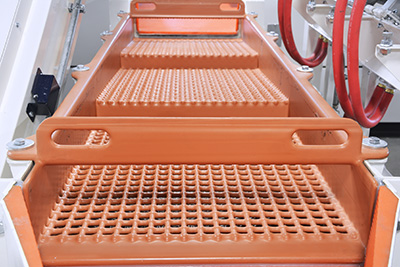
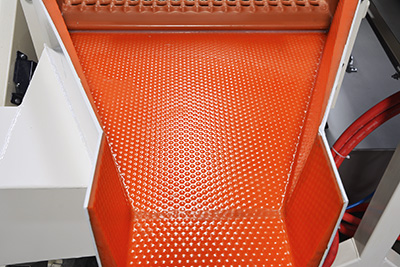
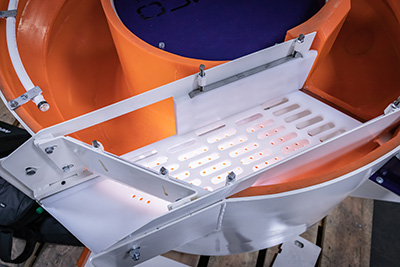
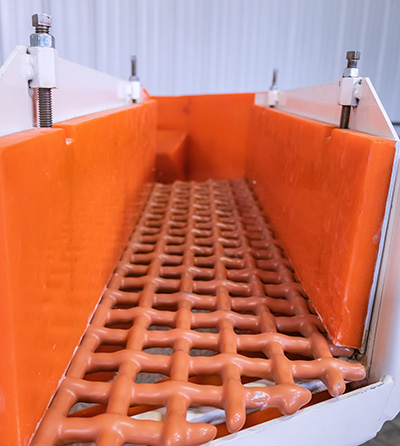
How Vibratory Screeners WorkA vibratory screener separates parts from media using controlled oscillating motion applied to a screen deck. Parts and media are discharged from the upstream finishing machine onto the inlet end of the screener. The oscillation creates a forward-traveling wave motion across the screen surface: the media (smaller than the screen openings) falls through to a return pan below, while parts (larger than the openings) travel forward across the screen and discharge at the far end into a collection container, conveyor, or downstream operation. Oscillators vs. Vibratory ScreenersBoth terms refer to similar separation equipment but describe slightly different motion patterns. A true oscillator uses a reciprocating side-to-side or back-and-forth motion, often with a longer linear stroke, which works well for heavier parts or aggressive separation of sticky or clumping media. A vibratory screener uses higher-frequency, smaller-amplitude vibration that produces a faster forward-travel speed across the screen, ideal for most parts-media separation applications in finishing operations. ALMCO offers both configurations and selects the right motion pattern based on your specific application. Screen Selection: The Most Important DecisionThe single most important specification on any vibratory screener is the screen itself. Screen opening size must be selected to reliably pass all media while retaining all parts, with enough margin to prevent part blinding (parts getting stuck in screen openings) and media carryover (media traveling with parts to the discharge). ALMCO’s process engineers specify screens based on:
For difficult separation applications, mixed part geometries, very similar part and media sizes, or unusual media shapes, ALMCO can engineer multi-deck screens, graduated-opening screens, or custom screen geometries that standard screeners can’t handle. |
Where Vibratory Screeners Fit in Your OperationParts-Media Separation After FinishingThe primary application. A vibratory screener positioned at the discharge of a vibratory tub, round bowl, or centrifugal finisher separates finished parts from media in a single automated step. Separated parts typically discharge onto a conveyor headed to washing or inspection, while media drops into a return hopper or vacuum pickup for the next finishing cycle. Replacing Underperforming Competitor ScreenersOne of ALMCO’s most common screener applications is drop-in replacement of competitor screeners that have worn out, deliver inconsistent separation, or require excessive maintenance. ALMCO engineers match existing screener dimensions, inlet/discharge geometry, and electrical specifications so the replacement drops into your current production flow without re-engineering surrounding equipment. Customers typically see immediate improvements in separation efficiency and reduced maintenance downtime. Foundry Post-Processing: Sand and Flash RemovalFor cast parts coming out of shakeout or post-casting processes, vibratory screeners remove residual sand and flash. The screening action separates loose material from part surfaces, preparing the castings for downstream finishing or machining operations. Foundry applications typically require heavier-duty oscillator configurations that can handle abrasive sand and heavier castings. Size-Grading Mixed Part BatchesWhen parts of different sizes are mixed in a single batch, common in job shops or facilities processing multiple part families, a multi-deck vibratory screener can separate parts by size into different discharge streams for separate downstream handling. This is particularly useful for operations that machine and finish multiple SKUs on shared equipment. Media Conditioning and GradingFinishing media breaks down over time, particularly ceramic and plastic media in aggressive deburring applications. A vibratory screener can separate usable media from broken fragments, fines, and undersized pieces, extending media life and maintaining consistent process performance. Some facilities screen media on a scheduled basis to keep the finishing process in spec. |
Why Specify ALMCO as Your Vibratory Screener Manufacturer
- Finishing-Specific Engineering Expertise: Unlike general-purpose vibratory screener manufacturers, ALMCO designs screeners specifically for the finishing industry, meaning every screener is sized, configured, and specified with knowledge of the finishing machines, media types, and part geometries it’ll be paired with. Our process lab can test your parts and media to specify the optimal screen configuration before equipment quotes.
- Drop-In Replacement Capability: If your current screener is underperforming, ALMCO can engineer a replacement that matches existing dimensions, inlet/outlet geometry, and electrical specifications, no costly re-engineering of the surrounding production line.
- Custom Screen Engineering: For separation challenges that standard screens can’t handle, very similar part and media sizes, unusual media shapes, multi-size part batches, ALMCO engineers custom screen configurations that deliver the separation efficiency your process requires.
- Integrated Systems Capability: Because ALMCO manufactures finishing equipment, vibratory screeners, conveyors, hoppers, and vacuum systems under one roof, screeners can be specified as part of a fully integrated production cell, with coordinated mounting heights, discharge geometry, and control integration between every component.
- U.S.-Based Manufacturing and Service: Every ALMCO vibratory screener is designed and manufactured at our facility in Albert Lea, Minnesota. Parts, service, and technical support come directly from the team that engineered your equipment, not a reseller or overseas distributor.